
From Constitution Day to Thanksgiving: One Small Group Reading Routine for the Entire Fall
Small group reading can get complicated really fast.
One group needs help decoding the text.
Another can read it independently but needs support figuring out what it actually means.
Another is ready to dig deeper, find evidence, and write about what they've learned.
Before you know it, you're planning what feels like three completely different reading lessons.
And then fall arrives.
Constitution Day. Football. Changing leaves. Spiders and bats. Halloween. Thanksgiving.
There are so many high-interest topics I'd love to bring into my reading groups — but I don't want seasonal reading to mean adding six more activities and six more routines to an already full plate.
I'd rather keep the routine incredibly simple:
Read. Understand. Respond.
That's it.
The text can change.
The level of support can change.
The expectations can change.
The routine doesn't have to.
READ
Every reading lesson starts in the same place. We read.
But “read” doesn't have to look exactly the same for every group.
One group might need to read the text with you. You may preview vocabulary, read portions aloud, work through tricky words together, or stop more frequently to check for understanding.
Another group may be ready to read with a partner. And another might read the text independently before meeting with you.
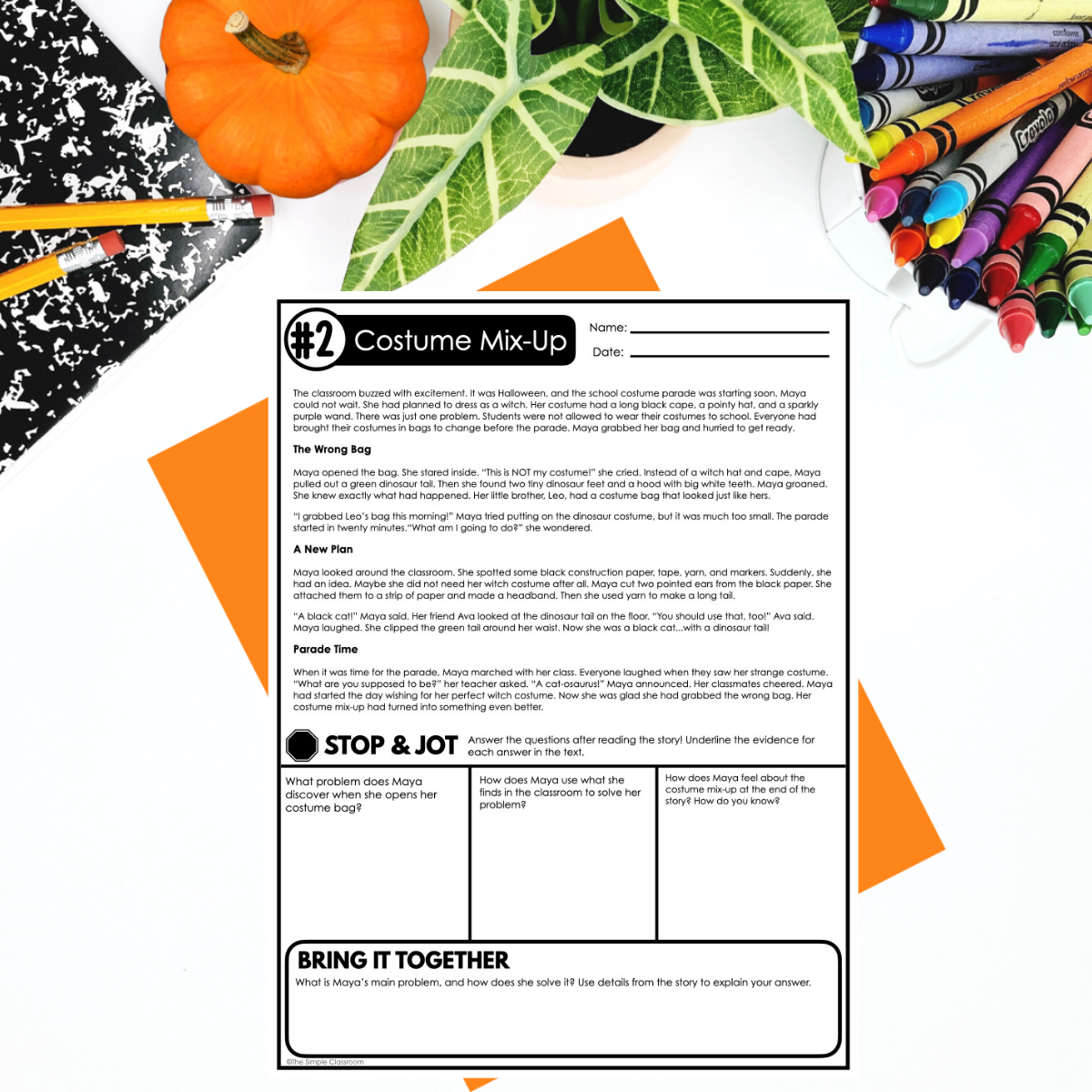
The goal is the same. The support isn't.
UNDERSTAND
Reading the words isn't enough. We want students to understand what those words are telling them. This is where I want students to slow down and actually interact with the text.
What is happening?
What is this mostly about?
Which details matter?
What did you learn?
What confused you?
What surprised you?
Can you explain this part in your own words?
With a group that needs more support, you might stop together and discuss prompts or questions orally before students jot anything down. You can model your thinking. Ask follow-up questions. Go back into the paragraph together. Help students figure out which information matters.
With another group, students might complete comprehension tasks independently and bring their thinking to the group discussion.
Same routine.
Different support.
First, we read. Then, we make sure we understand.
RESPOND
Once students understand the text, they're ready to do something with that understanding.
This is where you have options.
Students can answer comprehension questions and find evidence in the text. They can organize information on a graphic organizer. They can discuss their thinking with the group. They can complete a connected writing task. They can work through an extension activity.
And you don't have to choose the same response for every group.
A consistent routine does not mean identical instruction.
Your developing readers may respond orally with you before putting their ideas on paper.
Another group may complete the comprehension questions independently.
Your strongest readers may be ready to move beyond the basic questions and into the writing or extension task.
They're all responding to what they've read.
You're simply adjusting the level of independence and complexity.
The Reading Level Can Change. The Routine Stays.
This is the piece I think makes this approach so useful for small groups.
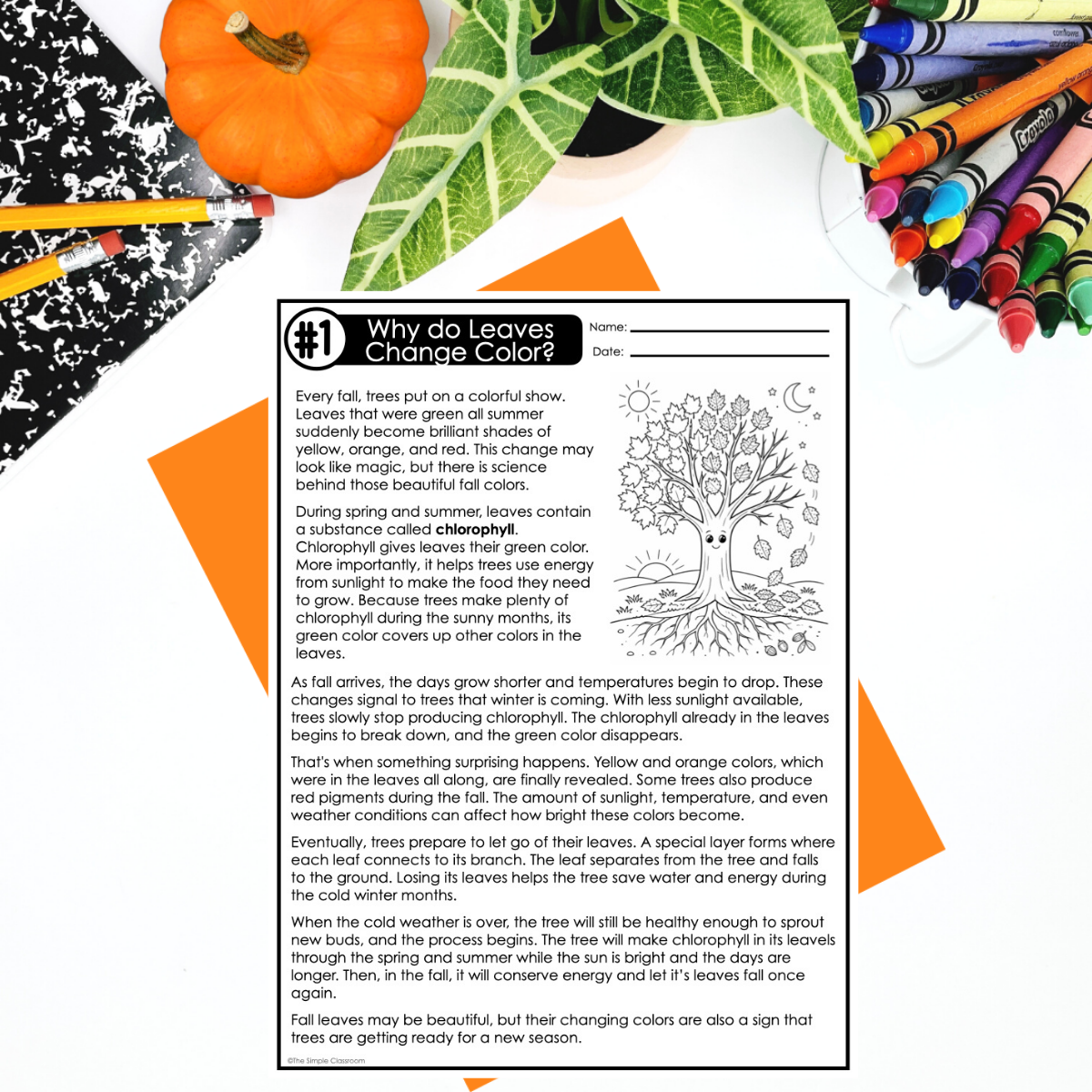
When students move from one group to another, the entire structure of reading time doesn't suddenly change. When a student is ready for a more challenging text, the routine doesn't change. When you need to provide more scaffolding one week, the routine doesn't change.
Read. Understand. Respond.
Over and over again.
The predictability helps students know what to do. And it makes planning much easier for you.
Instead of asking:
What activity should this group do?
What should I plan for my higher group?
What completely different resource do I need for my developing readers?
You can ask a much more useful question:
What support does this group need to read, understand, and respond to this text?
That's a very different way to think about small group planning.
Now Change the Topic
Once the routine is established, this is where seasonal texts become really useful.
You get to keep the instructional structure while changing the content enough to keep students interested.
Start with Constitution Day.
Read → Understand → Respond
Bring out a football text.
Read → Understand → Respond
And when October hits?
Bring on the spiders and bats. Honestly, this might be my favorite time to pull high-interest nonfiction into small groups.
Kids have questions. They want to know whether bats are really blind. They want to talk about creepy spiders. They want to tell you about the enormous spider they saw in their garage.
Use it. You already have their attention.
Now use that curiosity to get them reading closely, talking about a text, learning new vocabulary, finding evidence, and writing about what they've learned.
Then move into Halloween. And eventually Thanksgiving.
Fresh topic. Familiar routine.
One Text Can Give You Several Days of Small Group Instruction
You also don't have to squeeze an entire reading set into one small group lesson.
Day 1: Read
Introduce the topic, preview what students need, and read the text.
Day 2: Understand
Return to the text. Work through Stop & Jot questions, discuss important ideas, clarify misconceptions, and reread sections that deserve another look.
Day 3: Respond
Use comprehension questions, the graphic organizer, or the writing activity to help students show what they understand.
And you can absolutely shorten or stretch that rhythm depending on your schedule.
Some groups may move through the process quickly.
Others may need more time in the Understand stage.
That's okay.
The routine is there to support your instruction — not control it.
Reading Comprehension Packs
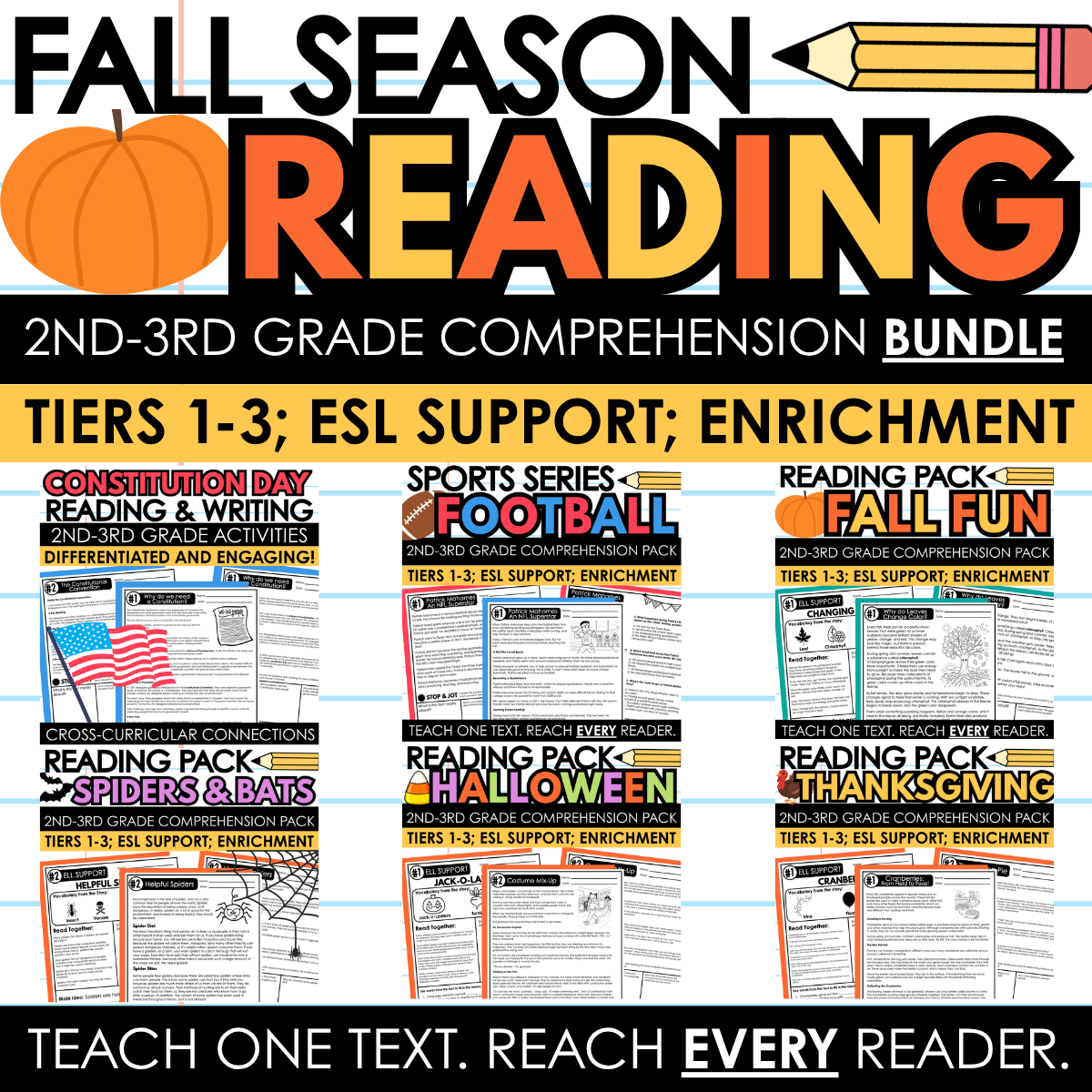
The Fall Reading Comprehension Growing Bundle currently includes six sets:
Constitution Day
Football
Fall
Spiders & Bats
Halloween
Thanksgiving
So instead of grabbing a random seasonal worksheet whenever you need something for your reading groups, you can build a collection of texts that all work within the same instructional routine.
Your students learn how the resources work.
You learn how to quickly adapt them for different groups.
And then you keep going.
From September through November.
And the Bundle Is a MUCH Better Value
You can absolutely purchase the sets individually.
The Constitution Day pack, for example, is $5.
But right now, the entire six-pack bundle is $12.99.
Purchased separately, the resources are worth more than $30.
So if you can see yourself using these regularly in your small groups, the bundle makes much more sense than picking them up one at a time.
Your Small Groups Don't Need Six Different Reading Routines
Differentiation doesn't have to mean creating a completely different experience for every student sitting at your small group table. Your students may be reading different levels of text. They may need different amounts of teacher support. They may respond in different ways. They may move through a lesson at different speeds. But the heart of the work can stay the same.
Read.
Can I access the text?
Understand.
Can I make meaning from what I read?
Respond.
Can I talk, write, or otherwise show what I understand?
That's reading.
Same routine. Different texts. Different levels of support.
And a whole lot less reinventing small group reading every week.
The Fall Reading Comprehension Growing Bundle gives you six sets of differentiated seasonal texts and activities you can keep pulling from all fall long.