
The Best Classroom Decor Doesn't Distract: 5 Ways to Create a Calm, Functional Learning Space
I'll admit it...
I've fallen into the Pinterest trap more than once.
You know the one.
You see a gorgeous classroom with color-coordinated bins, beautiful bulletin boards, matching labels, and every wall covered from floor to ceiling.
You spend days trying to recreate it.
Then school starts.
Within a week, the pretty classroom that took hours to set up isn't actually helping you teach.
Students still ask where to turn in homework.
They still interrupt lessons to ask what they're supposed to be doing.
And somehow that gorgeous wall of inspirational quotes has become...wallpaper.
Over the years, my philosophy has completely changed.
Now I ask one question before hanging anything on my classroom walls:
Will this help me teach or help my students become more independent?
If the answer is no, it probably doesn't earn wall space.
Here's how I think about classroom decor now.
1. Decor should answer student questions.
The best classroom decorations don't decorate.
They communicate.
Think about how many times you answer the same questions every day.
What are we learning?
What voice level should we use?
Where do I turn this in?
What supplies do I need?
What comes next?
Every one of those questions can become a visual support.
Your classroom starts working for you instead of requiring you to repeat yourself all day.
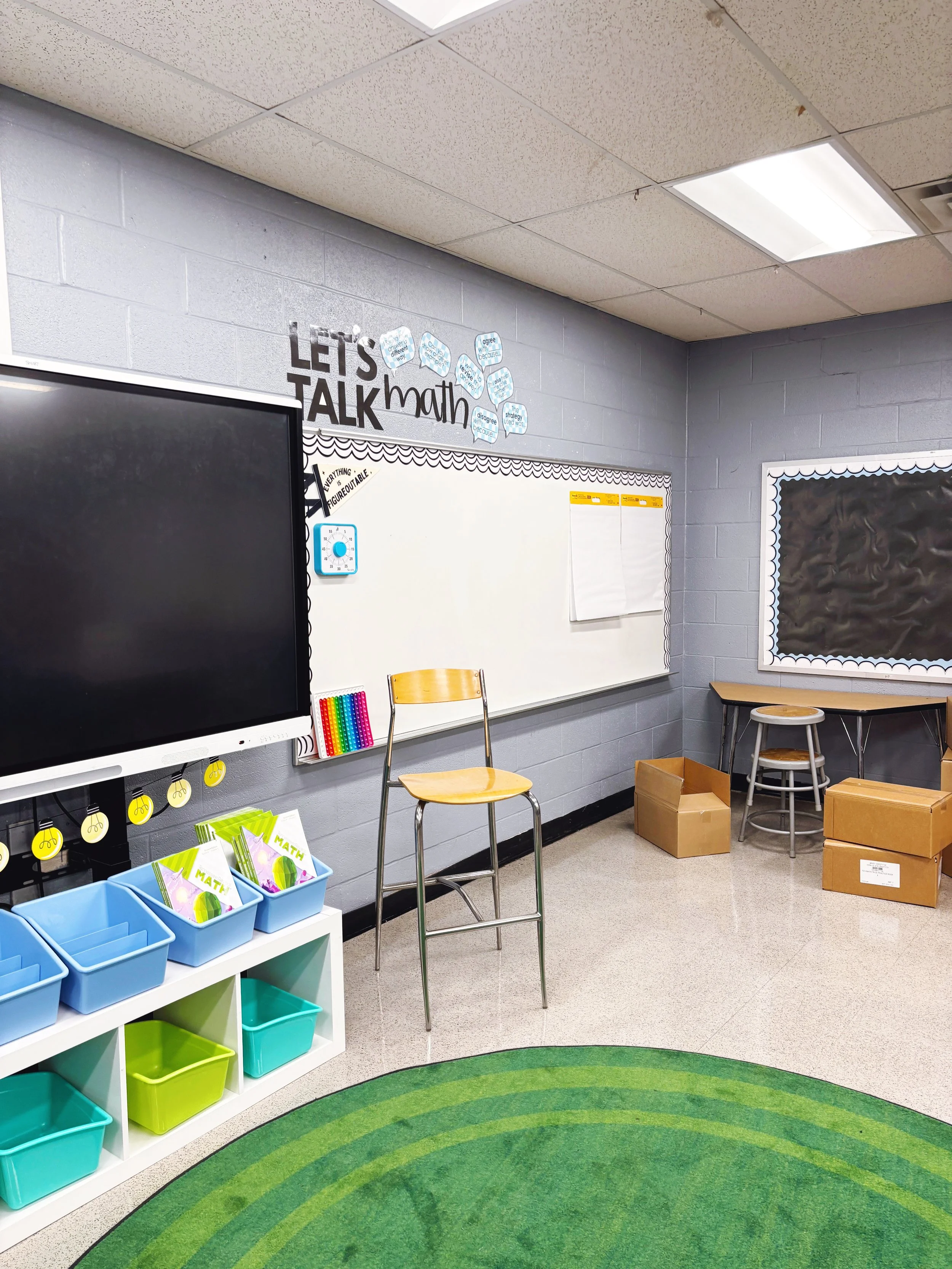
Back-to-school setup… with an intentionally blank bulletin board.
2. Leave blank space.
This one was surprisingly hard for me.
I used to think every inch of wall needed something.
Now?
Some of my favorite classroom spaces are intentionally empty.
Those blank areas become places where:
we solve math problems together
students share thinking
anchor charts grow naturally
learning stays visible
White space isn't unfinished.
It's instructional.
3. Create "working walls."
Some classroom displays should change constantly.
Instead of decorating every bulletin board, dedicate space to student thinking.
During math, our wall grows with us.
New vocabulary.
Strategies.
Models.
Examples.
Mistakes.
Those walls become far more valuable than another motivational quote because students actually use them.
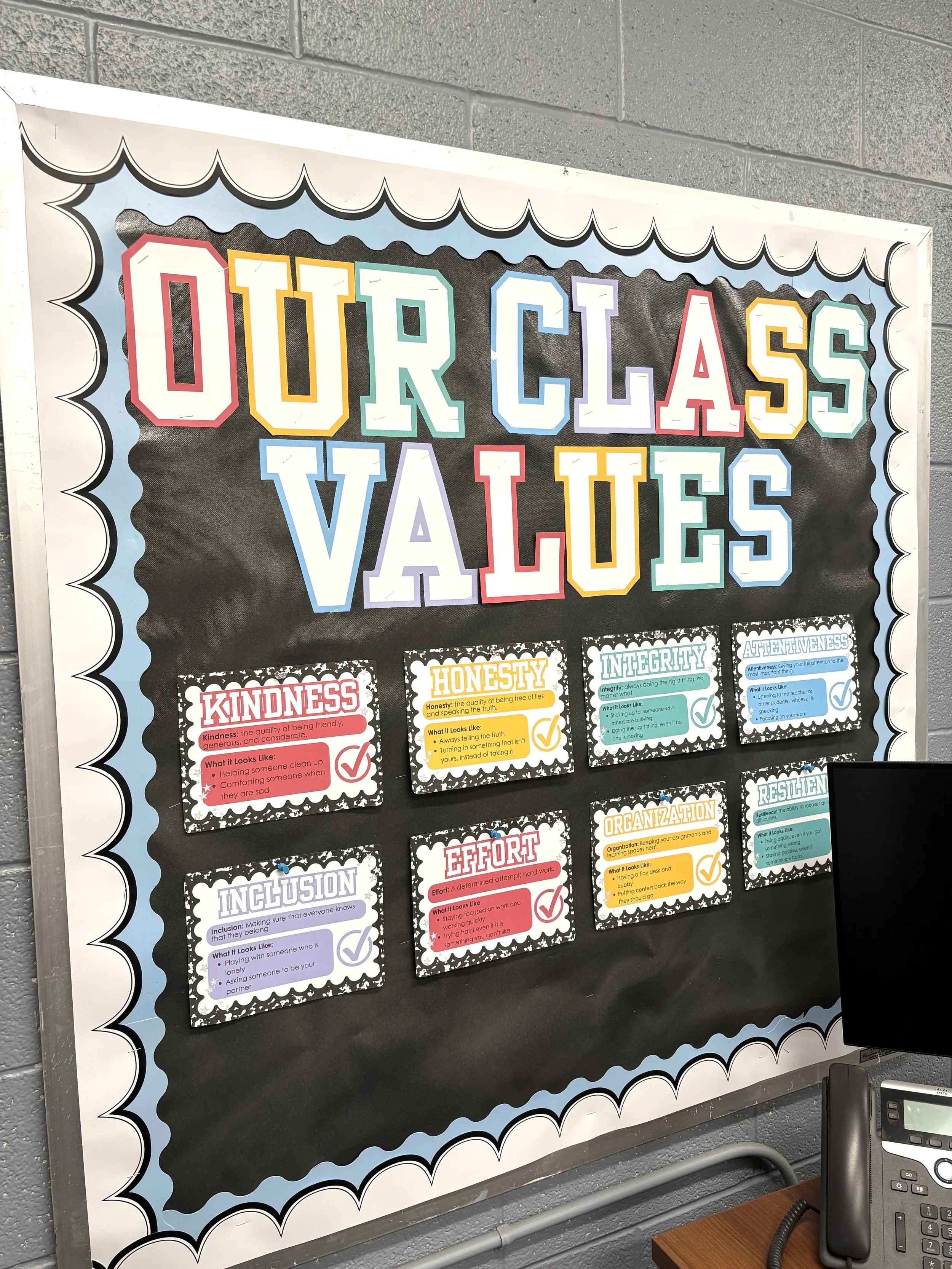
4. Give students visual reminders instead of verbal reminders.
One of my favorite examples is our classroom values.
I don't want to stop every lesson to remind students how we line up, work with partners, or transition.
Instead, those expectations stay visible all year.
When students need a reminder, I simply point.
The visual does the teaching.
That frees me up to keep teaching instead of constantly managing behavior.
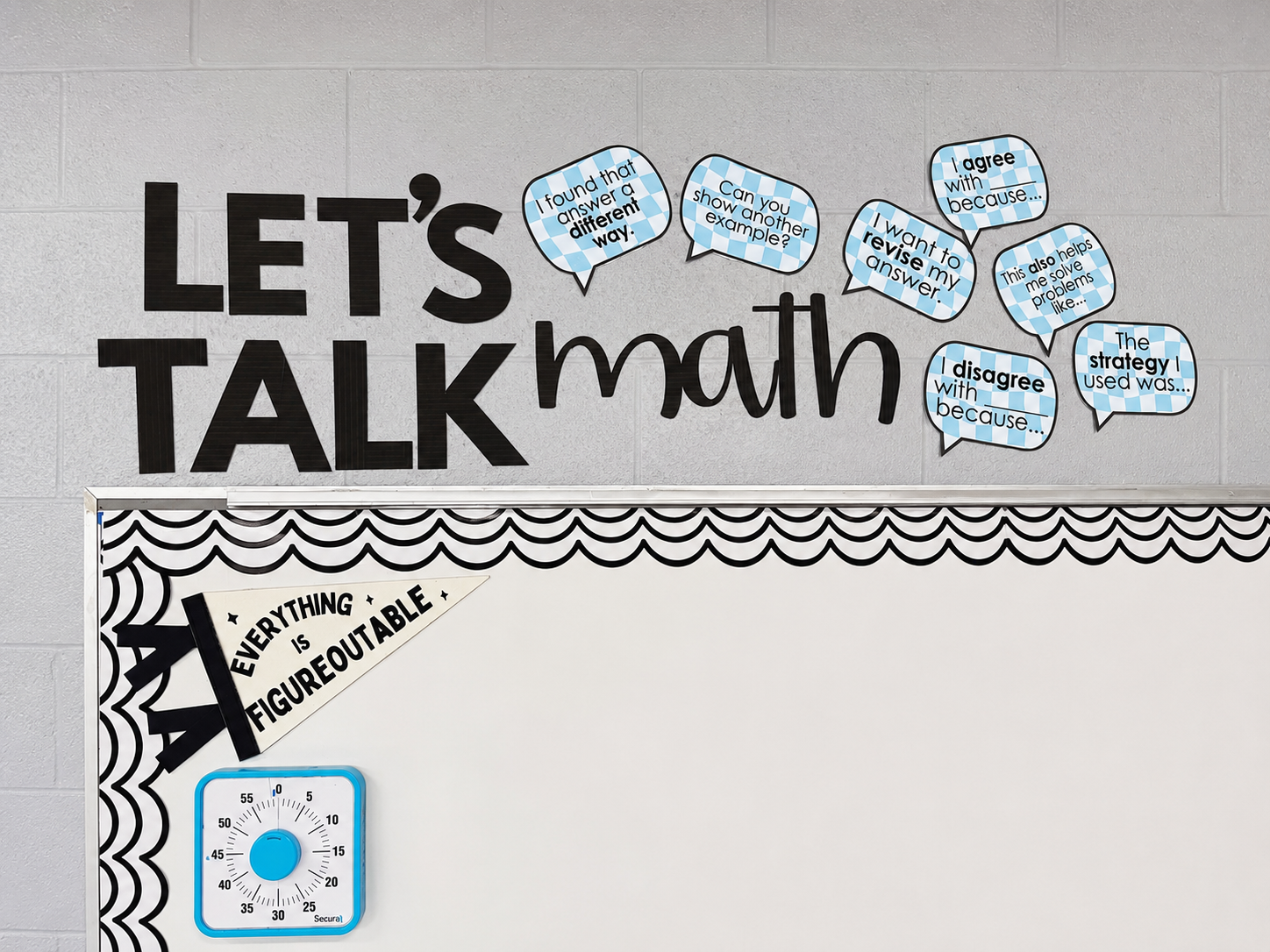
5. Let your walls teach students how to think.
One of the best displays in my classroom isn't decorative at all.
It's our Let's Talk Math display.
Instead of students saying,
"I don't know."
or
"I just guessed."
they begin saying things like:
"I agree because..."
"Can you explain your thinking?"
"I solved it another way..."
"I noticed..."
Those sentence stems quietly change the conversations happening in the room.
The display isn't there because it fills empty wall space.
It's there because it changes how students communicate.
Shop the “Let’s Talk Math” board here.
My "Wall Test"
Before I hang anything, I ask myself five questions.
Does this help students become more independent?
Will students actually use it?
Does it support instruction?
Does it reduce the number of questions students ask me?
Is it worth the visual space it takes up?
If the answer is yes...
It stays.
If not...
It probably doesn't belong.